
←
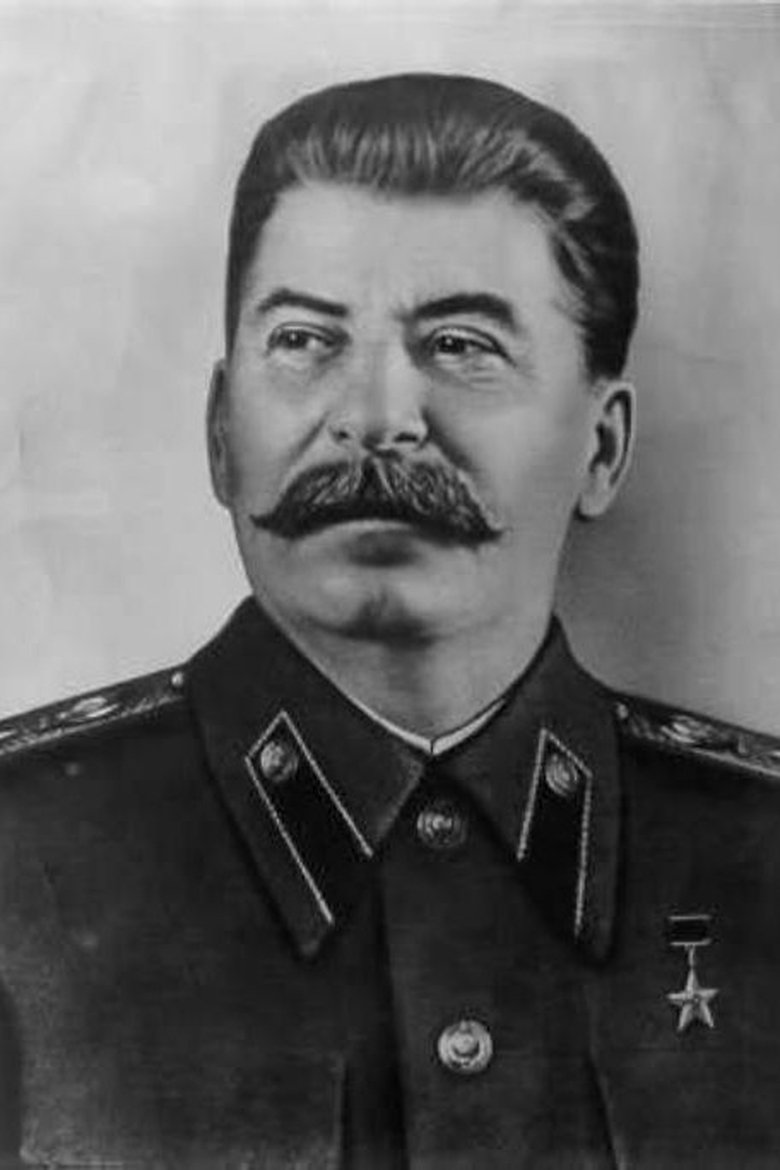
Meet Joseph Stalin
★ Acting🎥 137 films📺 25 TV shows📅 1925–2026🔥 1
Also known as: Ioseb Besarionis dze Jughashvili, Joseph Vissarionovich Stalin, Iósif Vissariónovich Dzhugashvili, Iossif Vissarionovitch Djougachvili...
Born in Gori, Caucasus, Russian Empire [now Georgia]
1878-12-18 (age 74 at death)
Died 1953-03-05
Iosif Vissarionovich Stalin (real name Dzhugashvili) was born in Gori, Tiflis province, Russian Empire - a Soviet political, statesman, military and party figure, a Russian revolutionary. Actual leader of the USSR. General Secretary of the Central Committee of the CPSU (1922-1953). Marshal of the Soviet Union (1943), Generalissimo of the Soviet Union (1945). People's Commissar of Defense of the USSR (since July 19, 1941), Chairman of the Council of People's Commissars of the USSR and Chairman of the USSR State Defense Committee. He also held the following positions: From April 3, 1922 to February 10, 1934 - Secretary General, then - Secretary of the Central Committee of the All-Union Communist Party of Bolsheviks (from 1952 - CPSU), from December 19, 1930, after Vyacheslav Molotov took the post of Chairman of the Council of People's Commissars of the USSR instead of Alexey Rykov. In 1912, at the suggestion of V.I. Lenin was included in the Central Committee of the RSDLP. At the same time, Joseph Dzhugashvili finally chose the pseudonym "Stalin" for himself. During the October Revolution, the Second All-Russian Congress was elected a member of the All-Russian Central Executive Committee and the Council of People's Commissars. In 1922, at the Plenum of the Central Committee of the RCP (b), he was elected a member of the Orgburo and the Politburo of the Central Committee of the RCP (b), as well as the General Secretary of the Central Committee of the RCP (b) (when Lenin was Chairman of the Council of People's Commissars of the USSR). In 1930, after the weakening and death of Lenin, Stalin finally emerged victorious from the internal party struggle, becoming the leader of the state. Stalin was the actual founder of the totalitarian dictatorship in the USSR. In 1928-1929 he was the initiator of the transition from the course of the New Economic Policy (NEP) to the course of industrialization, collectivization and building a planned economy, and intensified the policy of the cultural revolution in the USSR.
From Wikipedia
Joseph Vissarionovich Stalin (né Dzhugashvili; 18 December [O.S. 6 December] 1878 – 5 March 1953) was a Soviet revolutionary and politician who led the Soviet Union from 1924 until his death in 1953. He held office as the General Secretary of the Communist Party from 1922 to 1952 and as the premier from 1941 until his death. Despite initially governing the country as part of a collective leadership, he eventually consolidated power to become a dictator by the 1930s. Stalin codified the Communist Party's official interpretation of Marxism as Marxism–Leninism, and his version of it is referred to as Stalinism.
Born into a poor Georgian family in Gori, Russian Empire, Stalin attended the Tiflis Theological Seminary before joining the Marxist Russian Social Democratic Labour Party. He raised funds for Vladimir Lenin's Bolshevik faction through bank robberies and other crimes, and edited the party's newspaper, Pravda. He was repeatedly arrested and underwent several exiles to Siberia. After the Bolsheviks seized power in the October Revolution of 1917, Stalin served as a member of the Politburo and, from 1922, used his position as the General Secretary to gain control over the party bureaucracy.
After Lenin's death in 1924, Stalin won the leadership struggle over rivals, including Leon Trotsky. Stalin's doctrine of socialism in one country became central to the party's ideology, and his five-year plans, starting in 1928, led to forced agricultural collectivisation, rapid industrialisation and a centralised command economy. His policies contributed to a famine in 1932–1933 which killed millions, including in the Holodomor in Ukraine. Between 1936 and 1938, Stalin executed hundreds of thousands of his real and perceived political opponents in the Great Purge. During his rule, an estimated 18 million people passed through the Gulag system of forced labour camps, and more than six million people, including kulaks and entire ethnic groups, were deported to remote areas of the country.
Stalin promoted Marxism–Leninism abroad through the Communist International and supported European anti-fascist movements. In 1939, his government signed the Molotov–Ribbentrop Pact with Germany, enabling the Soviet invasion of Poland at the start of World War II. Germany broke the pact by invading the Soviet Union in 1941, leading Stalin to join the Allies. The Red Army, with Stalin as its commander-in-chief, repelled the German invasion and captured Berlin in 1945, ending the war in Europe. The Soviet Union established Soviet-aligned states in Eastern Europe and, with the United States, emerged as a superpower, with the two countries entering a period of rivalry known as the Cold War.
Stalin presided over post-war reconstruction and the first Soviet atomic bomb test in 1949. During these years, the country experienced another famine and a state-sponsored antisemitic campaign, culminating in the "doctors' plot". Stalin died in 1953 after a stroke. He was succeeded as leader by Georgy Malenkov and, eventually, Nikita Khrushchev, who, in 1956, denounced Stalin's rule and began a campaign of "de-Stalinisation".
One of the 20th century's most significant figures, Stalin has a deeply contested legacy. During his rule, he was the subject of a pervasive personality cult within the international Marxist–Leninist movement, which revered him as a champion of socialism and the working class. Since the dissolution of the Soviet Union in 1991, Stalin has retained a degree of popularity in some of the post-Soviet states (particularly Russia and Georgia) as an economic moderniser and victorious wartime leader who transformed the Soviet Union into an industrialised superpower. Conversely, his leadership has been widely condemned for overseeing mass repression and man-made famine which resulted in the deaths of millions of Soviet citizens.Web: Not available
Highest Rated Films



Powered by TMDB. © MyMovieScripts.com. All Rights Reserved. Make your videos interactive|Built by  TouchPoint.Video
TouchPoint.Video