
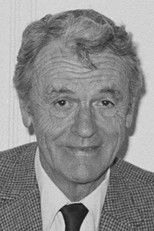
Meet Wolfgang Reitherman
★ Visual Effects🎥 7 films📅 1954–2009🔥 1
Also known as: Wooly Reitherman, Woolie Reitherman
Born in Munich, Germany
1909-06-26 (age 75 at death)
Died 1985-05-22
Reitherman began working for Disney in 1934, along with future Disney legends Ward Kimball and Milt Kahl. The three worked together on a number of classic Disney shorts, including The Band Concert, Music Land, and Elmer Elephant and in all, Reitherman worked on various Disney feature films produced from 1937 to 1981, including Snow White and the Seven Dwarfs (Slave in the Magic Mirror) to The Fox and the Hound (co-producer). He did the climatic dinosaur fight in Igor Stravinsky's The Rite of Spring in Fantasia, the Headless Horseman chase in "The Legend of Sleepy Hollow" section in The Adventures of Ichabod and Mr. Toad, the Crocodile in Peter Pan, and Maleficent as a dragon in Sleeping Beauty (the former three he animated and the latter he directed). Beginning with 1961's One Hundred and One Dalmatians, "Woolie", as he was called by friends, served as Disney's chief animation director. One of Reitherman's productions, the 1968 short Winnie the Pooh and the Blustery Day, won the Academy Award for Best Animated Short Film. He also served as a producer and sequence director, and starred as himself in the 1941 feature film The Reluctant Dragon. All three of Reitherman's sons — Bruce, Richard and Robert — provided voices for Disney characters, including Mowgli in The Jungle Book, Christopher Robin in Winnie the Pooh and the Honey Tree, and Wart in The Sword in the Stone. Reitherman directed several Disney animated feature films including, One Hundred and One Dalmatians (1961), The Sword in the Stone (1963), The Jungle Book (1967), The Aristocats (1970),Robin Hood (1973) and The Rescuers (1977). He is also known for reusing animation in movies directed by him. According to Floyd Norman, this was just one of his trademarks, and had nothing to do with time or cost savings: "Woolie was our director on The Jungle Book. Reuse was just Woolie’s thing. He never did it to save money. I really don’t think the “Old Guard” ever had any interest in saving money. I was never a big fan of reuse, but it wasn’t my place to tell these old guys what to do. One final thought. It never seemed to bother Walt, and I never heard him complain about reuse."
From Wikipedia
Wolfgang Reitherman (June 26, 1909 – May 22, 1985), also known and sometimes credited as Woolie Reitherman, was a German-American animator, director and producer. As a member of the "Nine Old Men" at Walt Disney Productions, Reitherman was known for his action-oriented animation.
Born in Munich, Reitherman relocated to the United States with his family. He attended Pasadena Junior College and briefly worked as a draftsman for Douglas Aircraft Company. Desiring a career in visual arts, Reitherman studied at the Chouinard Art Institute. On the advice of an art instructor, Reitherman applied as an animator for Walt Disney Productions. Reitherman animated on several Silly Symphonies cartoon shorts. He next animated the Slave in the Magic Mirror in Snow White and the Seven Dwarfs (1937), Monstro in Pinocchio (1940), and the climactic dinosaur fight in Igor Stravinsky's "Rite of Spring" segment of Fantasia (1940).
By 1941, the United States entered World War II, and Reitherman enlisted into the United States Army Air Forces (USAAF). While in service, he flew on several combat missions and was awarded the Distinguished Flying Cross. In 1947, Reitherman returned to the Disney studios as an animator, and within a few years, became a member of Disney's "Nine Old Men". He made his directorial debut with the 1957 short film The Truth About Mother Goose; within years, he became the first sole director for a Disney animated feature, beginning with The Sword in the Stone (1963).
During production on The Jungle Book (1967), Walt Disney died, and Reitherman assumed the creative leadership, remaining as director and producer on several consecutive Disney animated feature films throughout the 1970s. Additionally, he directed the Winnie the Pooh featurettes: Winnie the Pooh and the Honey Tree (1966) and Winnie the Pooh and the Blustery Day (1968), which won the Academy Award for Best Animated Short Film.
By 1977, Reitherman had intended to direct The Fox and the Hound (1981), but he left the project after having creative differences with Art Stevens. After developing unproduced animation projects, Reitherman retired from Disney in 1981. In 1983, he was awarded the Winsor McCay Award, and in 1985, Reitherman died in a single-car accident. He was posthumously honored as a Disney Legend in 1989.
Web: Not available

Powered by TMDB. © MyMovieScripts.com. All Rights Reserved. Make your videos interactive|Built by  TouchPoint.Video
TouchPoint.Video